What Happened to Tottenham Hotspur: From a Top Team to a Relegation Risk
At one time, Tottenham Hotspur was regarded as a “title contender” in the English Premier League, known for its aggressive playing style, quality players, and clearly defined coaching philosophy. However, in recent seasons, that image has gradually faded.
From a team that once competed for titles and advanced deep into European competitions, they have become inconsistent—losing matches they shouldn’t and even being seen at times as “at risk of dropping out of the top tier.”
The key questions are:
- What exactly has gone wrong with this team?
- Is the problem with the players, the coach, or the club structure?
- And from a betting perspective, is this form a “risk or an opportunity”?
This article will take you deep into every aspect of the issue, offering a straightforward analysis and connecting it with betting insights on V9Bet so you can understand more than just match results.
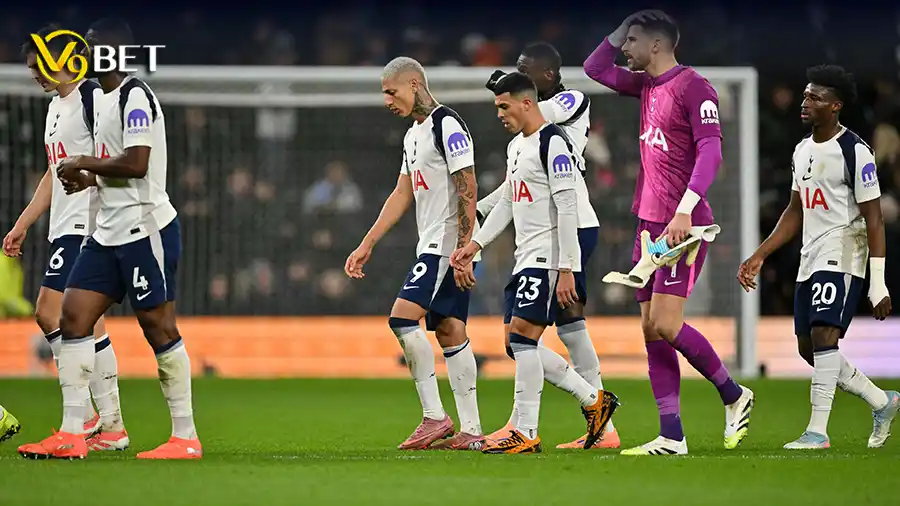
The players were disappointed with the result
The Beginning of Tottenham Hotspur’s Decline
Looking back to the time when Tottenham Hotspur was at its peak, the team had a clear structure, defined player roles, and a playing style capable of competing with top clubs.
However, a major turning point began when the team lost its “continuity,” whether through frequent managerial changes, key player departures, or a lack of clear direction in club management.
Inconsistent Managerial Changes
One of the main problems is frequent changes in managers, preventing the team from building a stable system. Each coach brings a different philosophy, forcing players to constantly adapt.
The result is “uncertainty” in tactics and a lack of confidence in gameplay.
Loss of Key Players
The departure of important players or a drop in form among core players directly affects team performance, as replacements are not equally effective.
A once balanced team becomes one lacking sharpness in both attack and defense.
Tactical and Playing Style Issues
Another key factor behind the team’s decline is tactical problems affecting both offense and defense.
In many matches, Tottenham struggles to control the tempo and often concedes goals from repeated mistakes.
- Weak defensive structure
- Lack of sharpness in attack
The defense lacks consistency and often loses positioning at crucial moments, making it easier to concede goals. This is not just an individual issue but a “systemic” weakness.
Even when creating attacking opportunities, finishing is not clinical enough to convert chances into goals. Combined with defensive issues, this puts the team at a disadvantage in many situations.
Impact on Performance and League Position
As these problems accumulate, the result is a “decline in league position,” affecting team confidence and increasing pressure from fans. The key reasons include:
- Inconsistent form
- Rising pressure
The team may win big matches but lose to smaller teams, making it difficult to maintain momentum. Poor results increase pressure from fans and media, impacting player mentality.

Images of fans repeatedly disappointed by their beloved team
Structural and Management Issues Within the Club
Looking deeper beyond on-field performance, the problems of Tottenham Hotspur are not limited to players or coaches but are also tied to the club’s “structure,” which has long-term effects.
Managing a Premier League club requires more than just transfers—it demands a clear “vision” for the future. In recent years, Tottenham has been heavily questioned in this regard.
While the club has invested heavily in stadiums and infrastructure, squad strengthening has appeared inconsistent and sometimes lacking precision.
Transfer Market Decisions
A clear weakness is signing players who do not align with the coach’s tactics. Some recruits fail to fit the system, leading to inefficiency.
The lack of “quality replacements” when key players underperform or get injured causes immediate imbalance.
Unclear Vision
Frequent managerial changes reflect a lack of clear direction. Sometimes the club appoints attacking-minded coaches, only to switch to defensive ones, forcing constant resets.
This directly affects performance consistency and prevents the team from building a clear identity.
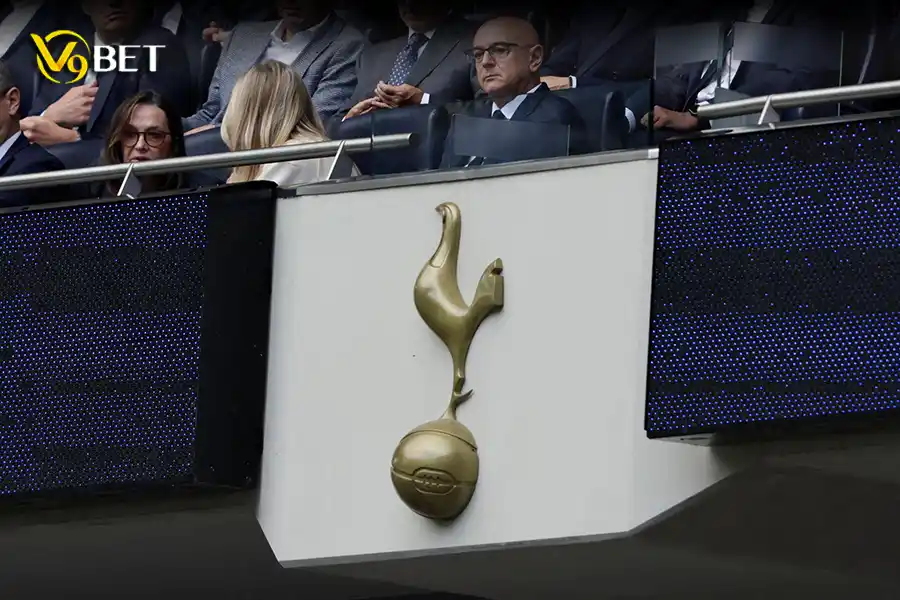
The board of directors was criticized as being one of the causes
Betting Perspective – Risk or Opportunity?
From a betting perspective, an inconsistent team like Tottenham Hotspur is a “double-edged sword.” While risky, it also offers profit opportunities if analyzed correctly.
Such teams often have more “open” odds compared to consistent top teams, meaning bettors can find value.
Uncertainty = Opportunity
Tottenham’s matches are highly volatile—some games are excellent, others unexpectedly poor—making betting markets more interesting.
If you can analyze pre-match factors like squad condition, lineup, and motivation, your chances of profit increase significantly.
Betting Strategies
- Avoid betting based on team reputation
- Focus on recent form
- Analyze opponents and playing styles
On V9Bet, you can combine these insights with odds to find valuable bets.
Read more: Erling Haaland: The Goal Machine Born to Break Records
Future Outlook – Can Tottenham Recover?
The big question is: “Can this team return to being a title contender?”
The answer is “Yes”—but it requires improvements in multiple areas, including rebuilding the squad, appointing the right manager, and establishing a clear system.
The most important factor is “continuity,” as successful teams usually have stable structures and avoid constant changes.
If Tottenham can fix these issues, they still have the potential to compete at a high level again.
Conclusion
The decline of Tottenham Hotspur is not caused by a single factor but a combination of issues both on and off the field—from tactics and management to player mentality.
However, every crisis brings opportunity, especially for bettors. Teams with inconsistency often create value in betting markets.
On V9Bet, you can use these insights to analyze matches, choose the right timing, and increase your chances of profit.
If you understand:
- What problems the team has
- How their form is trending
- And when to place bets
You won’t just watch football—you’ll read the game and turn it into real profit.